What House of Parfum shows
House of Parfum sells perfumes and beauty products in a premium, trust-heavy environment. That makes it a strong KeepCard example because many return decisions in this category are subjective: changed mind, scent expectation, gifting mismatch, or hesitation after purchase.
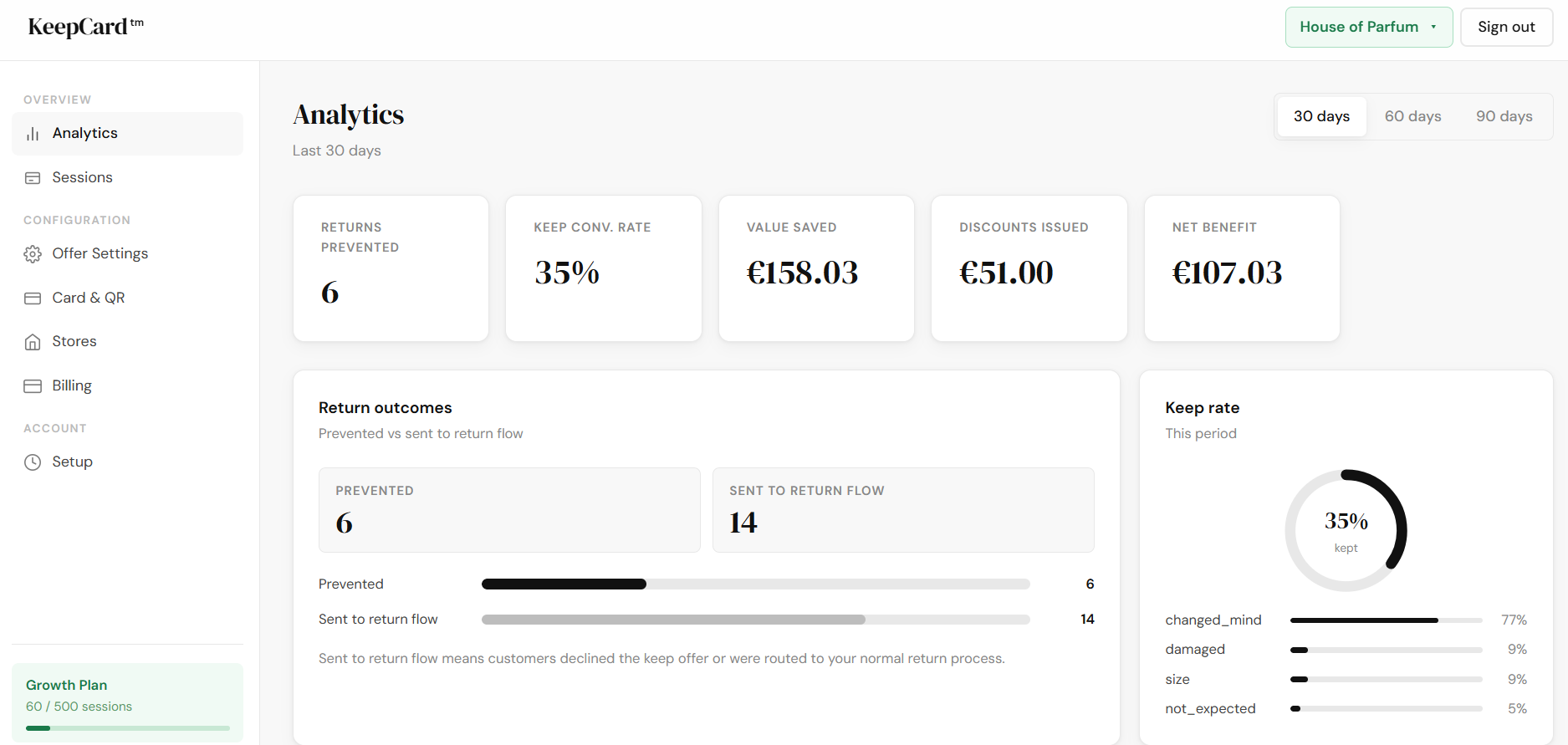
The dashboard shows KeepCard producing transaction-level outcomes on a live store, not just theoretical savings.
30-day results
- 6 returns prevented. Six sessions where a customer intended to return and left the flow having kept the order instead.
- 35% keep conversion. More than one in three return-intent sessions resolved without reverse logistics.
- €158.03 gross value saved. Before incentive cost, that is the order value retained across prevented returns.
- €51.00 in discounts issued. The total cost of all keep offers accepted across the window.
- €107.03 net benefit. What was retained after discount cost. That is the number that matters.
What the data also reveals
The sessions that converted best were changed-mind cases, exactly the profile where a keep offer should be used. Damaged and defective cases were routed normally, without any offer logic applied.
That is how a keep-offer system should work: selective, verified, and off the table for the claims that need proper resolution.
Why this category is a strong fit
- Fragrance and beauty purchases often involve subjective expectation.
- Trust is important, so the merchant needs a clean path for defects and sensitive claims.
- Not every soft return reason should trigger full reverse logistics.
- Store credit or partial-refund incentives can be more attractive than a formal return process for low-friction cases.